
BRUXISM, JAW AND ARM PAIN
In this new world of immediacy, productivity and self-demand, we have we have high levels of stress. Surely you suffered or have heard of bruxism tension in the jaw. And problems in this region can cause injuries and pain in other parts of the body without knowing it..
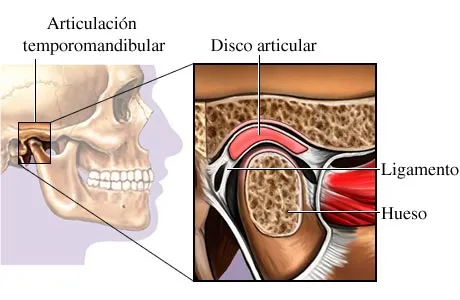
In this new world of immediacy, productivity and self-demand, we have we have high levels of stress. Surely you suffered or have heard of bruxism tension in the jaw. And problems in this region can cause injuries and pain in other parts of the body without knowing it..
We always say it:
“What hurts is not always what is failing.”. The symptoms are local but the origin, hardly ever."
When pain appears in the arm, the elbow or arm, we almost always look directly there. We think of tendons, muscles and joints. However, In consultation we see more and more cases in which the real origin of the problem is not in the arm, but somewhere else:
The jaw or temporomandibular joint (ATM) and its close relationship with cervical They usually participate in this whole painful picture.
It may sound strange at first, but it makes a lot of sense if we understand how the body is organized and how the nervous system collects, processes and regulates information.
The TMJ as a postural sensor
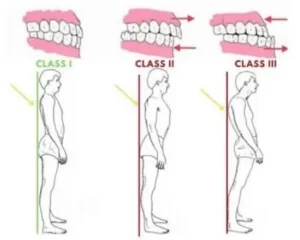
TMJ is not just for chewing or speaking. It's a powerful posture sensor, at the same level as the eyes, the feet or inner ear.
And captor postural It is a part of the body that sends special information to the brain about the position and movement of the body.
In simple words: it's like a sensor natural which tells the brain “where I am and how I move” so it can coordinate the muscles correctly.
For example:
- Los pies they feel the ground and help maintain balance.
- Las cervical inform about head position.
- The ATM (jaw) also works as a captor, influencing posture and neck movements, shoulders and arms.
If there is a jaw dysfunction (locks, bruxism, asymmetries, chronic tension...), that information arrives distorted.
👉 What happens then??
The brain organizes movement from an incorrect information base. The result is usually less efficient movements and poor load management.
All of this can result in many problems at the cervical and upper limb level.. Not because TMJ directly “injures” the arm., but because conditions how we move.
Cervical: the neurological highway to the arm and how bruxism affects it
Of the cervical the nerves that provide:
- Information engine (motion)
- Information sensitive (touch, temperature, position)
- Information vegetative (tissue metabolic regulation)
If there is cervical irritation —very common when there is TMJ dysfunction—, we find that this highway stops working optimally. This is when we find cervical movement dysfunctions., inflammation and tension.
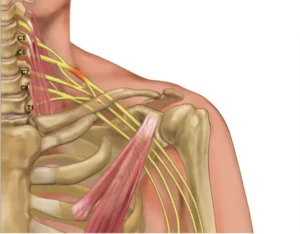
Alteration of sensory and motor information
When sensory input to the arm is poor or distorted, the brain:
- Processes worse information who receives
- Perceive worse motion
- It adjusts worse force
- Protects excessively = more pain
This increases the risk of overloads, relapses and persistent pain.
The great forgotten: the vegetative nervous system
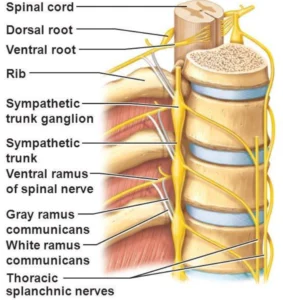
for us, this is one of the most important part and the least known.
The vegetative nervous system is responsible for maintaining homeostasis and therefore responsible for:
- Regeneration of fabrics
- Drainage of waste substances
- Control of the inflammation
- Quality and quantity of blood flow
When there is sustained irritation cervical o dorsal alta, that regulation is compromised. The tissues of the shoulder or arm can:
- Repair worse than daily wear (worse if, besides, the postural sensor does not work well)
- become inflamed more easily
- Stay in a state of “constant threat”
👉 The result is not a specific injury, but a damage that perpetuates over time.
So… How do we solve it??
If we only treat the arm:
- We can relieve symptoms
- But the problem usually returns
Treatment makes more sense when we look jaw, cervical and we carry out a good neurological control. There the results tend to be more stable.
A more comprehensive approach
In cases of upper limb pain resistant to treatment, It is essential:
- Assess the ATM, cervical, dorsal, rib cage, viscera…
- Analyze the mobility, cervical strength and control
- Understand how the nervous system is regulating the cervical and arm
It is about not to be left alone with the symptom and explore further.
🔍 If you want to know more about this topic, I recommend the following articles: